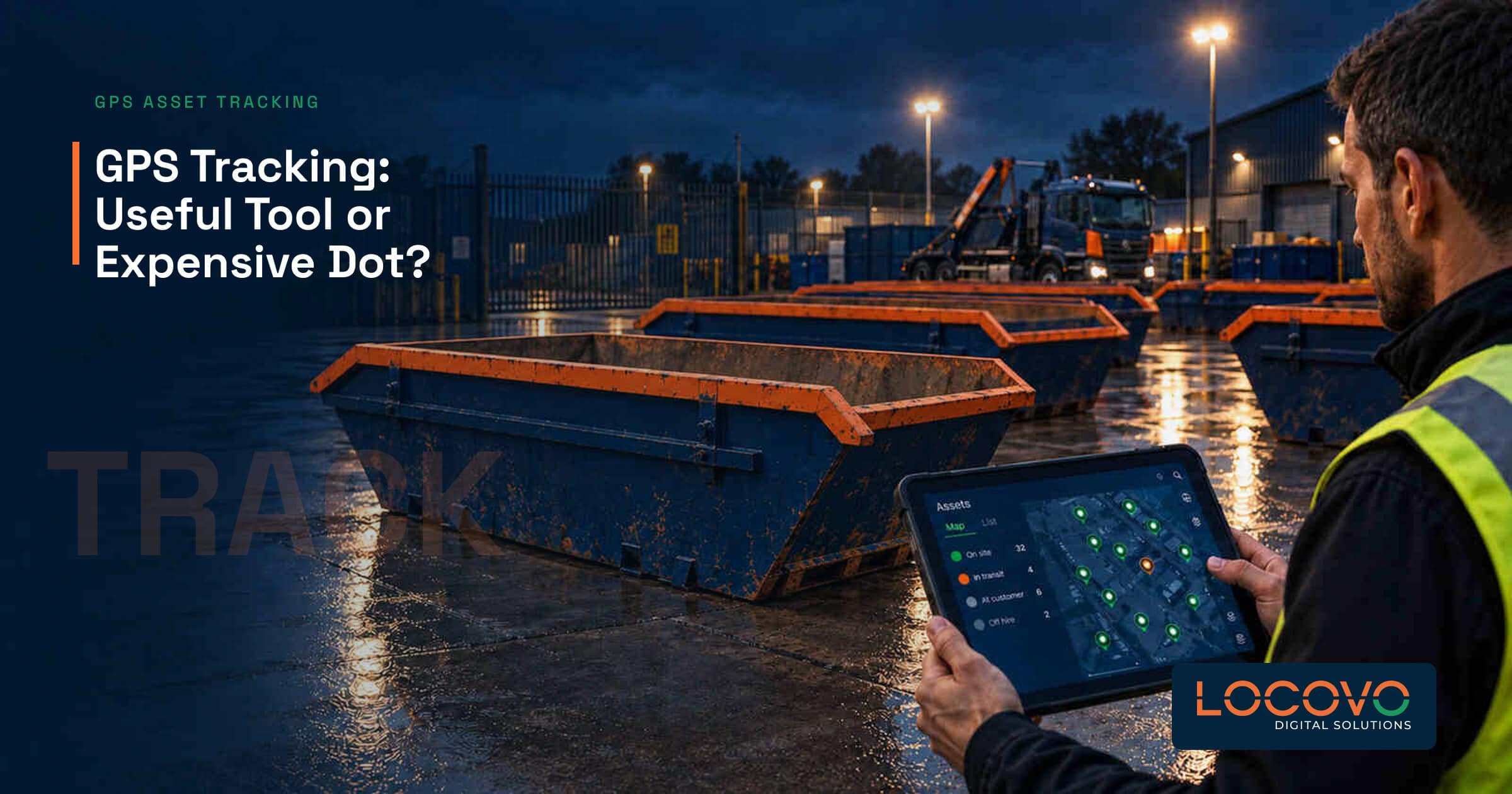
A dot on a map feels like certainty. Sometimes it is. Sometimes it is an expensive battery slowly dying underneath a skip.
GPS skip tracking can help with theft, unauthorised movement and high-value asset visibility. It can also create false confidence if the hardware, installation and response process are not suited to the job.
Before buying trackers, decide what problem you need them to solve.
Separate routine visibility from physical tracking
If the office wants to know which customer has a skip, a reliable delivery and collection record may be enough. If the concern is that a skip could be moved from that site without permission, location hardware adds something different.
These are two related but separate questions:
- Operational location: where the job record says the skip was placed.
- Physical location: where a device reports the asset to be.
Good operators may use both, but they should not pay for physical tracking when the actual failure is poor booking discipline.
Choose the assets and risks first
Tracking every unit can be difficult to justify. Start with the skips most exposed to loss or unauthorised movement: specialist containers, long-term placements, remote sites or areas where assets have disappeared before.
A targeted trial gives you evidence. How often did the location data change a decision? Did it help recover anything? How much staff time went into false alerts and battery checks?
Make sure the hardware can survive skip life
Skips are stacked, struck, dragged, pressure-washed and exposed to weather. A device designed for a van dashboard may not last long on steel that is handled by chains and heavy machinery.
- Protection from impact, water and dirt
- A mounting position that does not interfere with lifting or stacking
- Battery life that matches the reporting frequency
- Signal performance around yards, buildings and containers
- A replacement and maintenance process
- A clear way to match the device to the correct asset
Battery life and update frequency pull in opposite directions
Frequent location updates use more power. Long battery life often means fewer reports. The right balance depends on the risk.
A tracker used to confirm that a long-hire skip remains on site may not need minute-by-minute updates. A theft-response use case may need quicker movement alerts. Buy for the decision you expect to make, not the most impressive demo screen.
Location data only earns its keep when somebody knows what to do with it.
Plan the response before switching alerts on
If a tracker reports movement at 2am, who receives the alert? What counts as suspicious? Could the customer have legitimately repositioned the skip? Who checks the job record before escalating?
Write a short response process. Otherwise staff either ignore alerts or react without enough context. Both outcomes weaken the value of the system.
Keep vehicle and worker privacy in view
Asset tracking can sometimes reveal information about drivers, employees or customers. If trackers are also used on vehicles, operators should be open about the monitoring, define a lawful purpose, limit access and avoid collecting more data than the business needs.
This is an area for proper privacy advice and policy, not a paragraph copied from a tracker supplier. The Information Commissioner’s Office provides current UK guidance on workplace monitoring.
Connect the location with the customer and job
A coordinates feed on its own leaves the office doing the interpretation. The useful view connects the tracker, skip identity, customer site and expected hire status.
If an asset moves, staff can see whether a collection was scheduled, whether the site is still active and who to contact. That context turns a map into an operational tool.
Treat GPS as a layer, not the foundation
Cost the full tracking programme
The unit price is only the start. Include installation, subscriptions, replacement batteries, damaged devices, staff time and the work required to investigate alerts. A device that costs little but needs constant attention can become the expensive option.
Compare that cost with a defined exposure. How many suitable assets were genuinely lost in the last year? What was the replacement cost? How much time did the team spend searching? Could better movement records have solved some of those cases without GPS?
- Hardware purchase and fitting
- Connectivity or platform subscription
- Expected battery and device replacement
- Time spent reviewing location and alerts
- Recovery action after a suspicious movement
- Value of losses reasonably expected to be prevented
A targeted deployment often produces a cleaner case than blanket tracking. Put devices on the assets and placements with a credible risk, review the result after a fixed period and expand only when the data earns it.
Locovo is developing GPS asset-tracking capability as part of the wider platform roadmap. We do not market it as a fully live module today. The foundation is a dependable asset and movement record; physical location data should strengthen that record where the risk justifies it.
Read our broader guide to skip tracking once published, or explore the current Locovo Dashboard.