Digital Waste Tracking is not solved by buying a tag and sticking it on a skip.
The tag may help identify an asset. The legal record still depends on accurate information about the waste, the people and sites involved, and the movement or receipt being reported through the government service.
For skip-hire operators, the sensible preparation is to clean up the operational workflow now. Do not wait until a mandatory record is due and then discover that customer, carrier, site and waste details live in four different places.
This article reflects official information checked on 8 September 2026. Digital Waste Tracking is being introduced in phases, and operators should check current government guidance for the rules that apply to their nation, role and site.
What is Digital Waste Tracking?
Digital Waste Tracking is the government’s central service for recording waste movements and receipts. It is intended to replace or change parts of the fragmented paper and digital record-keeping used across the sector.
The rollout is phased. In England, the Digital Waste Tracking (England) Regulations 2026 come into force on 1 October 2026. The first mandatory phase focuses on affected waste-receiving sites. Requirements and dates are not identical across every UK nation, so a UK-wide operator must not assume one timetable applies everywhere.
Work out which role your business is performing
A skip-hire company can play more than one role. It may supply the skip, carry the waste and receive it at a permitted site. The reporting responsibility depends on the activity and phase of the rollout, not the logo on the lorry.
Map the business as it operates:
- Where does the waste originate?
- Who is the producer or holder?
- Which carrier moves it?
- Which site receives it?
- Who controls the receiving-site record?
- Which software or person will submit the required data?
If the company operates a transfer or treatment site, the receiving-site obligations may be the first practical deadline. Get role-specific advice rather than relying on a general summary.
The reporting problem starts before the weighbridge
A receiving site can only report accurately when the incoming information is usable. If the booking says “mixed rubbish”, the carrier details are out of date and the source site is unclear, the digital form does not repair the record.
Review what the office captures when the order is placed, what the driver confirms during collection and what the receiving site records on arrival. Remove duplicate entry where possible, but do not remove the checks that catch bad data.
Clean up the core data
Preparation should focus on information quality and ownership.
- Legal business and site details
- Waste carrier registration information
- Permit or exemption details where relevant
- Customer and waste producer information
- Source and destination addresses
- Waste classification and description
- Dates, times and quantities required by the applicable record
- The person responsible for reviewing exceptions
Do not put one person in charge of “sorting DWT” while the booking and yard processes remain unchanged. The record is built by several parts of the business.
Where NFC-tagged skips could help
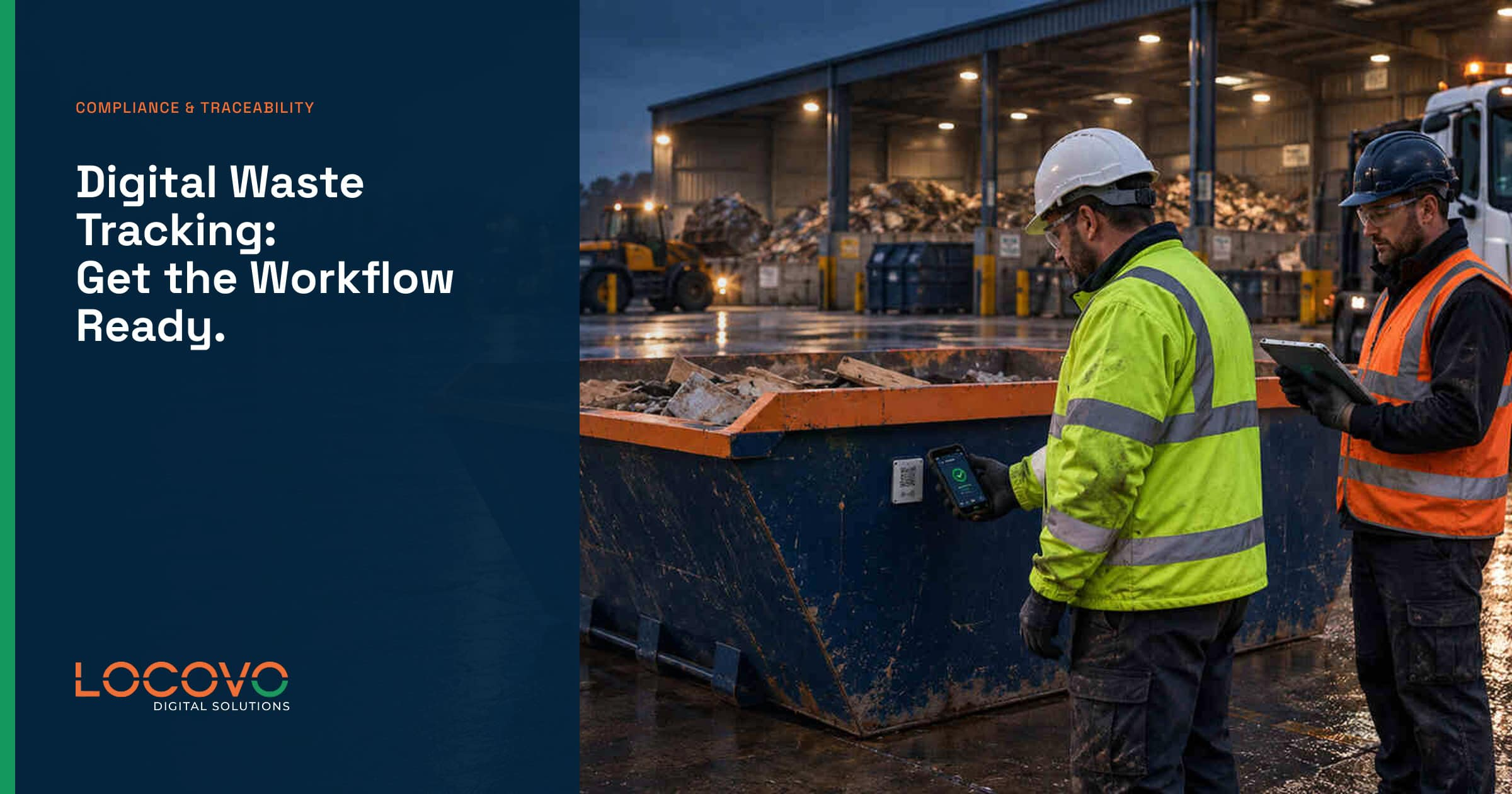
An NFC tag can give a skip a quick, reliable identity. A driver or yard operator could tap the tag to open the correct asset and job record, reducing manual entry and the risk of choosing the wrong skip number.
That could help connect the asset with timestamps, job status, photos and relevant waste-movement information. It still does not create compliance by itself. The required data must be accurate, complete and submitted through an accepted route.
NFC can make identification quicker. It cannot decide whether the waste record is legally correct.
Choose how the business will use the service
Operators may use the government service directly or work through commercial software, depending on the available routes and their own volume. The right choice depends on how many records the business handles, where the data already sits and how much duplicate entry the team can tolerate.
If a software supplier says it supports Digital Waste Tracking, ask precise questions:
- Which nation, phase and business role does the integration cover?
- Is the connection live in production or still planned?
- Which records can be submitted?
- How are rejected or incomplete records handled?
- Can staff see what was submitted and when?
- What happens if the government service is unavailable?
Do not accept “DWT ready” as a complete answer.
Test exceptions, not just the happy path
A straightforward load from a known customer is the easy case. Test the awkward work: missing carrier details, a changed destination, mixed or misdescribed waste, a rejected load, a device with no signal and a job completed after the office closes.
Decide who corrects the information and how quickly. Keep an audit trail. Staff should know whether a record has been accepted, rejected or still needs attention.
A practical readiness checklist
- Confirm the current legal timetable for every nation in which you operate.
- Identify each role your business performs.
- Map the journey from booking to collection and receipt.
- List the required data and where it comes from.
- Clean customer, carrier, site and permit records.
- Choose the direct-service or software route.
- Test normal jobs and exceptions with the staff doing the work.
- Set ownership for failed submissions and corrections.
- Keep checking official updates as later phases approach.
Locovo’s position on Digital Waste Tracking
Digital Waste Tracking and NFC-assisted data capture are planned Locovo modules. We are not claiming that the current Dashboard submits compliant records to Defra or that an NFC-tagged skip makes an operator compliant.
The immediate job is to connect clean customer, asset and movement data so the operation is in a stronger position for digital reporting. Explore the Locovo Dashboard and follow the official Digital Waste Tracking guidance on GOV.UK for current requirements.